
1857 or 2026?
The Interment Records of the city of Troy list the cause of Eliza Blakely’s death as “violence by husband.” The Troy “Daily Times” of October 12, 1857, describes a sad story which, unfortunately, could be taken directly from the news today.
The 1855 NYS Census for Troy lists Charles Blakely, 25, born in England, an engineer, and wife Eliza, 25, born in Ireland, and their daughter Isabella, 1, living in a two-family house. They had been in town for three years. The bare facts of the census hide the fact that she, at least, was an alcoholic, and he was an abusive husband. About the time the census was taken, he had beat her badly enough to fracture her skull. When a warrant was issued for his arrest, he fled to Canada. Until she recovered, her child was in care elsewhere. Charles returned home, they reconciled, and he was not arrested.
In 1856 they quarreled and he beat her again. The Overseer of the Poor in the city visited her and found she was horribly bruised, and they “had the most degraded mode of life.” The Overseer again took charge of what were now two children and helped her until she recovered. This time her husband was jailed. Despite what had happened to her, she began to visit him in jail, taking him food. One day while drunk herself, she smuggled him a bottle of whiskey. She too was jailed as a result.
By October 1857, they had been living for two months in a house on the alley between Third and Fourth Streets, opposite the Catholic Church- presumably St. Mary’s on Washington Park. They had two rooms: a kitchen/dining room and a bedroom. The owners, Mr. and Mrs. Higgins, lived where they could see their rooms. On a Thursday night, the neighbors heard shouting and loud cries coming from the apartment, “it sounded like someone was in agony.” But Friday morning, Charles left the house as usual to go and care for his horses- he worked delivering coal. Eliza came out of the apartment and appeared “as sprightly and well-looking as ever.” Charles drove into the alley several hours later, went back into the apartment, and resumed the quarrel. Mrs. Higgins said, “it is a wonder the ceiling don’t come down over her head with the racket.”
Once Charles left, a couple of neighbor women went in and found Eliza “stretched on the bed in a state of torpor, which might have been produced by strong drink or her injuries.” The women gave her a drink of water. By afternoon, she had blood running from her ear. Why did her neighbors not call for a doctor? The reporter said, “it is characteristic of the people by whom she was surrounded that they had not charity enough to send for a physician.” Or was it that they didn’t know her well? Were afraid of her violent husband? Knew she was often incoherent due to drink? Didn’t want to get involved?
Friday night, Mr. Higgins went to Charles Blakey and said he should not beat his wife that way. He responded that she did not prepare his meals or take care of the house and was always drunk. When a neighbor went in to see her Saturday morning, after her husband had left for work, Eliza was dead, her two small children in the room with her, uncertain what they should or could do about mom.
However, Charles had not gone to work Saturday morning, but to borrow $2.00 from his employer, James O’Callahan. He told O’Callahan that he could not work as his wife was sick. then he went to the train depot and escaped. When Dr. Reed Bontecou, Troy’s coroner, did the autopsy, he found that Eliza had died of “laceration of the intestines.” There was blood in the abdomen and there was bruising everywhere. Charles was not heard of again.
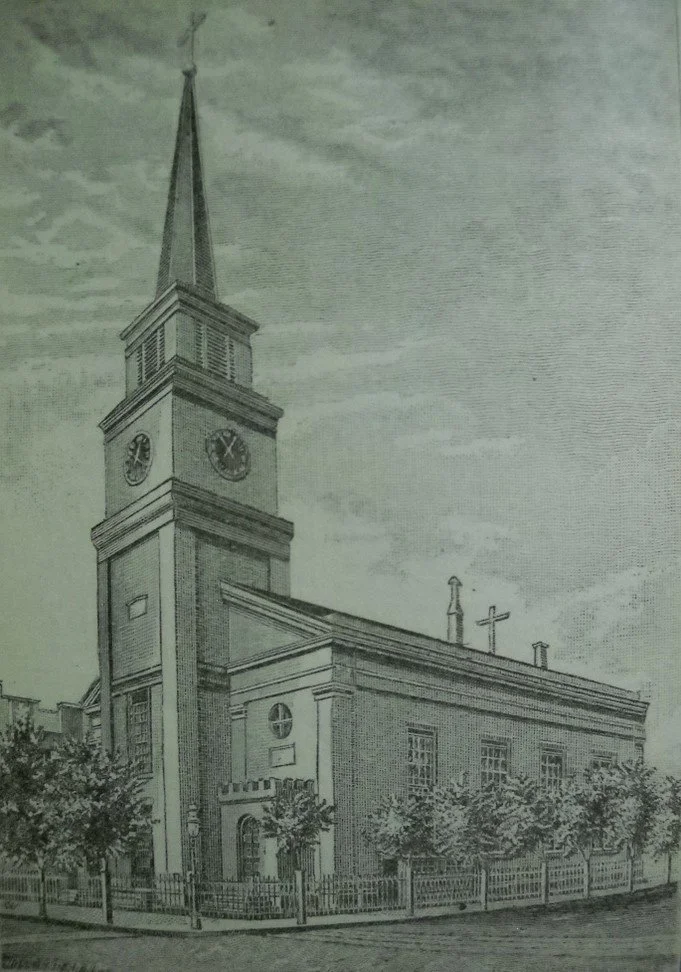
St. Mary’s Church, 3rd & Washington. RCHS photo collection.
After the murder, many curious onlookers visited the site for a while. “Small groups, mostly women, stand upon the opposite side of the alley and discuss in every tongue but Anglo-Saxon their theories of the murder.” (Troy Times, 11/12/1857). The apartment was a “revelation of the low life of Troy,” the “extreme poverty and lack of regard for the essentials of decent life.”
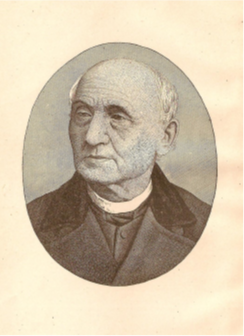
Rev. Peter Havermans
On a more practical note, Reverend Mr. Havermans of St. Mary’s Church took up a collection to benefit the two children, raising $60. He had taken them in charge and world provide for their welfare in the future.
This story has all of the elements of such a tale today: substance abuse leading to poverty, frustration leading to violence, an abused woman who can’t get free of her abuser, either physically or psychologically, neighbors unwilling to step in and help, the failure of the justice system to change a difficult situation, AND a community willing to step up to help in the end.